


If you've just bought your first copper water bottle — or you're still deciding between copper and steel — there's one question almost everyone asks before anything else: how long should the water actually sit inside before I drink it?
It's a fair question. Too little time, and the water barely changes. Leave it too long, and you start wondering if you're overdoing it. The good news is that copper water storage isn't complicated once you understand the "why" behind the timing — and once you do, it becomes a simple, satisfying part of your daily routine rather than something you have to think twice about.
This guide walks through exactly how long to store water in a copper bottle, why that window exists, and how to build a routine you can stick to for years, whether you're new to the practice or you've been drinking Tamra Jal (copper water) your whole life.
The Short Answer: 6 to 8 Hours Is the Sweet Spot
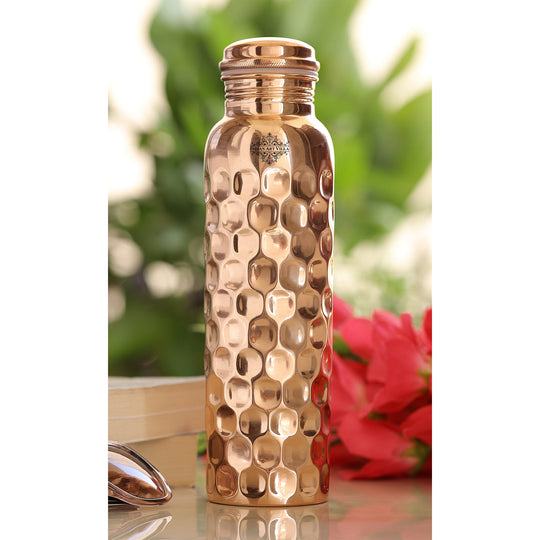
Across Ayurvedic tradition and modern testing alike, the consensus is remarkably consistent: store water in your copper bottle for 6 to 8 hours, or simply overnight, for the best results.
This is the window in which the oligodynamic effect — the natural process by which copper releases trace ions into water — does its most meaningful work. It's long enough for the water to take on copper's antimicrobial and mineral-enriching properties, and it fits perfectly into a routine most people already have: fill the bottle before bed, drink it first thing in the morning.
If you're using your copper bottle throughout the day rather than as an overnight vessel, don't worry — even a few hours of contact time (from around 4 hours onward) is enough for measurable copper ions to be present, so a bottle you sip from at your desk all afternoon is still doing its job.
What's Actually Happening Inside the Bottle
It helps to understand what "storing" water in copper really means, because it isn't magic — it's simple, well-documented chemistry.
Copper is a naturally reactive metal. When water sits against a copper surface, tiny amounts of copper ions gradually move from the metal into the water. This is the same oligodynamic effect that makes copper doorknobs and hospital surfaces naturally resistant to bacteria — copper physically disrupts the cell walls of many microbes on contact.
Independent testing on copper drinkware, including evaluation by microbiologist Professor Bill Keevil of the University of Southampton, has measured this ion release at 4, 8, and 16-hour intervals and found that copper levels stay within recognized drinking water safety guidelines throughout. A widely cited 2012 study published in the Journal of Health, Population and Nutrition found that storing water in copper vessels for around 16 hours reduced harmful bacteria — including E. coli and Vibrio cholerae — to below detectable levels. That's the same principle Ayurveda captured thousands of years ago, long before anyone had a name for ions or oligodynamics.
The takeaway: the copper isn't sitting there doing nothing between the 6-hour mark and the 24-hour mark. It's continuously, gently working — which is exactly why the habit of filling a copper vessel before bed was never just tradition for tradition's sake.
Can You Store Water in Copper Long-Term?
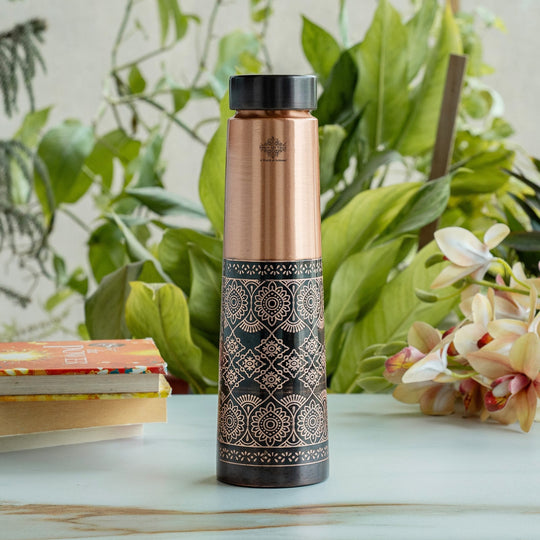
This is where it's worth being precise, because "longer is better" isn't quite the right way to think about copper water.
Up to 24 hours is generally considered the safe upper limit for a single fill. Within this window — and especially within the recommended 6-8 hour range — copper levels in the water stay comfortably below the World Health Organization's guideline value of 2 mg per litre for copper in drinking water. Testing on copper bottles at the 16-hour mark, for instance, has consistently shown copper levels remaining well within that threshold.
The reason 24 hours is treated as the ceiling rather than a target isn't that the water becomes unsafe overnight — it doesn't. It's simply that copper is a trace mineral your body needs in specific, modest daily amounts, and there's no extra benefit to loading more of it into the water than your body will actually use. Think of it the same way you'd think about a multivitamin: the recommended dose is the effective dose, and doubling up doesn't double the benefit.
So the simple, practical rule that Ayurvedic tradition and modern water-safety research both land on is this: fill it, let it rest for 6-8 hours (or overnight), drink it, and refill with fresh water daily. That daily refill habit is really the entire "long-term storage" answer — you're not meant to store the same water for days at a time, you're meant to build a fresh, repeating ritual, which is part of what makes copper water such a sustainable, low-effort wellness habit in the first place.
Should You Refrigerate Your Copper Bottle?
No — and this is one of the most useful things to know as a new copper bottle owner. Copper water is traditionally, and most effectively, enjoyed at room temperature.
Refrigeration slows down the very ion-release process that makes copper water valuable. Cold temperatures suppress the oligodynamic effect, meaning a chilled copper bottle simply won't infuse water the way a room-temperature one will. If you're used to reaching for a cold bottle from the fridge, this might take a small adjustment — but most people find that room-temperature water actually pairs beautifully with the calm, grounding ritual copper water is known for, especially first thing in the morning.
If you want a cold drink during the day, that's completely fine — just enjoy your copper-infused water separately, at room temperature, as part of your dedicated routine rather than treating the copper bottle as your everyday chilled water bottle.
Is Overnight Storage Actually Good for You?
Overnight storage isn't just convenient — it's the method Ayurveda has recommended for centuries, and it happens to line up perfectly with the 6-8 hour ionization window modern testing points to.
Here's what a typical overnight routine looks like:
-
Evening: Fill your copper bottle with clean, filtered water and leave it at room temperature — a bedside table or kitchen counter works perfectly.
-
Overnight (6-8+ hours): The water rests undisturbed while the oligodynamic effect gently infuses it with trace copper ions.
-
Morning: Drink 1-2 glasses on an empty stomach, ideally 30 minutes before eating or drinking anything else, including coffee or tea.
This isn't an arbitrary ritual — drinking on an empty stomach is thought to allow for the best absorption, and it's a practice called Ushapan in Ayurveda, meaning early-morning water therapy. Many long-time copper water drinkers describe it as one of the most consistent, low-effort wellness habits they've kept up over the years, precisely because it asks so little: fill it once, and the copper does the rest overnight.
How Much Copper Water Is Safe to Drink?
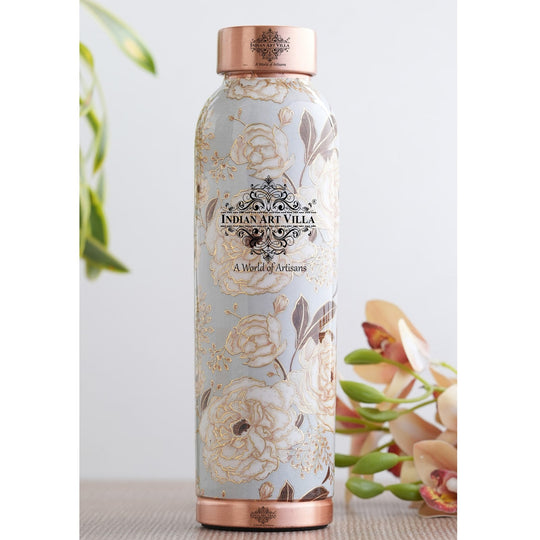
Copper is an essential trace mineral — your body needs it every day for things like red blood cell formation, connective tissue health, and normal immune function. The World Health Organization's safety guideline for copper in drinking water sits at 2 mg per litre, and independent testing has consistently shown that water stored in a copper bottle for 6 to 24 hours stays well within this limit.
That's what makes copper bottles so easy to build into your daily routine — simply fill your bottle each evening, let it rest for the recommended 6-8 hours, and drink from it through the day as you normally would with any water bottle. Since the WHO guideline is based on concentration rather than quantity, enjoying water from your full bottle daily fits comfortably within safe limits, making it a simple, moderate wellness habit rather than something that needs careful rationing.
How to Use a Copper Water Bottle: Getting the Most Out of It
A few simple habits will help you enjoy copper water at its best, day after day:
-
Use filtered or clean drinking water. This is simply good practice for any water storage vessel, copper included.
-
Avoid acidic liquids. Copper bottles are designed for plain water. Lemon water, juice, tea, coffee, and other acidic or hot beverages should be enjoyed from a separate container, since acidity accelerates ion release beyond the intended range.
-
Keep it at room temperature. As covered above, this is what allows the oligodynamic effect to work properly.
-
Clean it regularly. A quick rinse with a natural lemon-and-salt or tamarind paste scrub once or twice a week keeps your bottle's interior bright and functioning at its best — no harsh chemicals needed.
-
Refill daily. Fresh water each evening or morning keeps your routine simple and your copper intake right where it should be.
Whether you're using a personal copper water bottle for your morning ritual or a larger copper water dispenser for the whole household, the same core timing principle applies: 6-8 hours for ideal infusion, up to 24 hours as a safe outer limit, refilled fresh every day.
The Bottom Line
Copper water storage is one of the simplest wellness rituals you can build into your day — no supplements, no equipment beyond the bottle itself, no complicated protocol. Fill it before bed, let it rest 6-8 hours, and drink it the next morning at room temperature, and you're following exactly what thousands of years of Ayurvedic tradition and modern independent testing both point to as the ideal practice.
Once it becomes a habit, you'll find you don't even think about the timing anymore — you'll just fill your copper bottle each evening the way you'd set an alarm, and let it do its quiet work overnight.
Frequently Asked Questions
Can you store water long term in copper?
Copper water isn't meant for long-term, multi-day storage. The ideal window is 6-8 hours (overnight is perfect), with 24 hours considered the safe upper limit for a single fill. Rather than storing one batch for days, the recommended practice is to refill your bottle with fresh water daily, which keeps copper levels in a safe, beneficial range and keeps the ritual simple.
Can I refrigerate my copper water bottle?
It's best not to. Refrigeration slows the oligodynamic effect that allows copper ions to infuse the water, so a chilled bottle won't provide the same benefits as one left at room temperature. Copper water is traditionally, and most effectively, enjoyed at room temperature — store your bottle on a counter or bedside table rather than in the fridge.
Is it good to drink water kept in a copper vessel overnight?
Yes — overnight storage is actually the most recommended way to use a copper bottle. Filling it before bed gives the water a full 6-8+ hours to absorb copper's natural properties, and drinking it in the morning on an empty stomach is the traditional Ayurvedic practice of Ushapan.
Can I drink from a copper water bottle every day?
Yes, daily use is exactly how copper bottles are meant to be enjoyed. The general guidance is 1-2 glasses of copper-stored water per day, refilled with fresh water each time, as part of a balanced daily routine — a simple habit that fits naturally into your morning.
Which metal is healthiest for drinking water?
Copper stands out among drinking-water vessels for its unique combination of benefits: it's naturally antimicrobial through the oligodynamic effect, it's a source of an essential trace mineral your body needs daily, and unlike plastic, it's completely free of leachable synthetic chemicals. This combination of natural purification and mineral benefit is why copper has remained a trusted choice for water storage across cultures for thousands of years, and why it continues to be recommended today alongside modern testing that confirms its safety.
