


Short answer: no, not really. A copper-plated bottle is usually a thin copper (or copper-look) coating over another metal, and that thin layer — especially once it scratches, tarnishes, or wears through with regular use — can't reliably deliver the ion release that makes drinking from copper worthwhile in the first place. If you're buying a copper bottle specifically for its wellness benefits, the difference between "plated" and "pure" isn't a small technicality. It's the whole point.
Copper bottles have exploded in popularity outside India over the last few years, showing up in wellness routines from Los Angeles to London. But as demand has grown, so has the number of budget "copper-look" and copper-plated bottles on the market. They're shinier, cheaper, and dishwasher-friendly — and none of that is a coincidence, because none of those things are true of solid copper. Here's what's actually going on underneath that shine, and why it matters for anyone buying a copper bottle for the water itself, not just the aesthetic.
Pure Copper vs. Copper-Plated: What's the Real Difference?
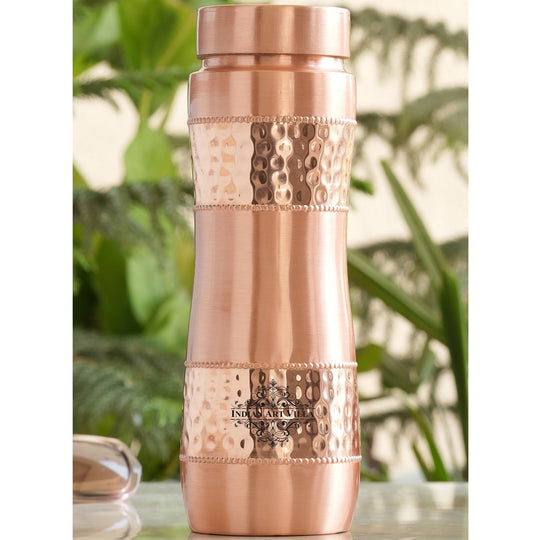
A pure (or "solid") copper bottle is made entirely of copper, inside and out. Every drop of water sits directly against copper metal from the moment it's poured in. A copper-plated bottle, on the other hand, is built from a base metal — usually stainless steel or brass — with a thin electroplated layer of copper on top, sometimes finished with a lacquer coating to keep it from tarnishing.
That distinction sounds minor until you look at what actually makes copper water special: it's a slow, natural transfer of copper ions from the metal into the water, known as the oligodynamic effect. This transfer needs sustained, direct contact between water and solid copper — not a fraction-of-a-millimetre coating that may or may not still be intact by the time you fill your bottle.
Why a Thin Coating Can't Replicate the Oligodynamic Effect
Electroplating deposits copper in a layer typically just a few microns thick. Compare that to a solid copper bottle, where the entire wall of the vessel — often well over a millimetre — is copper. A microscopically thin surface layer simply doesn't hold enough copper mass to sustain the same slow ion release over hours of contact that a solid copper wall provides.
There's also the lacquer problem. Many plated bottles are coated with a clear lacquer specifically to stop the copper from reacting with air and water — because untreated, the plating would tarnish almost immediately. But a lacquer sealant that stops oxidation also stops ion transfer into your water. You end up with a bottle that looks like copper but functions, from the water's perspective, like the base metal underneath.
And that's before wear enters the picture. Plating chips, scratches, and rubs thin with regular washing and daily use — often within months. Once it does, your water is sitting against whatever the base metal actually is, not copper at all.
What You're Really Drinking From, Once the Plating Wears
This is the part most copper-plated bottle listings don't mention: once the copper layer wears down, the water is in contact with the base metal underneath — commonly stainless steel, sometimes brass. Stainless steel is inert and food-safe, so that outcome isn't dangerous, but it also means you're no longer getting any of the copper exposure you paid for. You've simply bought a stainless steel bottle with copper aesthetics.
If the base metal is a lower-grade alloy rather than food-grade stainless steel, unmarked plated bottles from unregulated sellers can be harder to verify — which is exactly why solid copper, with nothing hidden underneath, is the more transparent choice for anyone who wants to know precisely what their water is touching.
Solid Copper Is Also the Only Option That Fits the Tradition Behind It
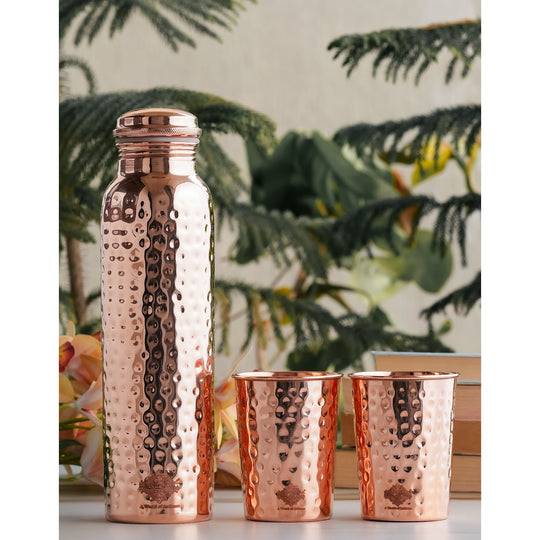
Drinking water stored in copper vessels — Tamra Jal, in Ayurveda — is a practice thousands of years old, built entirely around solid copper vessels, not coated ones. The ritual of storing water overnight in a copper vessel and drinking it in the morning depends on hours of direct copper-to-water contact to work as intended. A plated surface, particularly a lacquered one, was never part of that tradition, because it can't do the job the tradition is built on.
This is also why solid copper is the standard in regions where copper vessels have always been part of daily drinking water — the entire practice assumes solid metal, not a decorative finish.
How to Tell If a Bottle Is Solid Copper or Just Plated
● Weight: solid copper is noticeably heavier for its size than a plated bottle of the same dimensions, since the whole wall is dense metal rather than a light base coated in a thin layer.
● Interior finish: check the inside of the bottle, not just the outside — the interior should show the same warm copper tone and patina as the exterior.
● Patina over time: solid copper naturally darkens and develops patches of patina with use; a lacquered plated bottle stays artificially shiny far longer because it's sealed off from air and water.
● Price: solid copper costs more to produce than a plated base metal, so an unusually low price on a "copper" bottle is often a sign it's plated.
● Seller transparency: reputable copper bottle makers state clearly whether a product is solid copper or copper-plated — if a listing avoids the word "solid" or "pure" entirely, that's worth asking about.
Choosing a Bottle Built for the Long Term
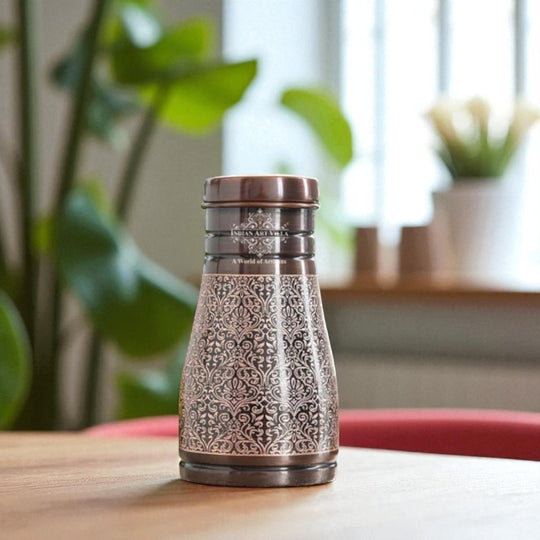
A solid copper bottle isn't just the better choice for ion transfer — it's also the one that ages the way copper is supposed to. Over months of use, solid copper develops a natural patina that many people consider part of its character, and that patina doesn't come at the cost of function the way a worn-through coating does. Hand-crafted solid copper bottles from Jaipur artisans, made using the same thathera metalworking traditions recognised by UNESCO, are built as one continuous piece of metal specifically so the water never touches anything else.
If you're shopping for a copper bottle for its wellness benefits rather than just the look, it's worth checking that a product is explicitly listed as solid or pure copper before you buy — that one detail decides whether you're actually getting what you're paying for.
The Bottom Line
A copper-plated bottle can look identical to a solid copper one on a shelf, but functionally, the two aren't the same product. If the goal is the traditional benefits associated with drinking from copper, a solid copper bottle is the only version built to deliver them consistently, without a coating standing between you and the metal.
Frequently Asked Questions
Is a copper-plated bottle bad for you?
Not necessarily unsafe on its own, but it won't deliver the same benefits as solid copper. If the base metal is food-grade stainless steel, drinking from it is generally fine — you simply aren't getting meaningful copper exposure, especially once the plating wears.
How long does copper plating usually last?
It varies by quality, but daily washing and handling commonly wears through plating within several months to a year, at which point the bottle no longer functions as copper at all.
Does a solid copper bottle need any special care?
Yes — hand washing with a mild acid like lemon or tamarind, rather than a dishwasher or harsh detergent, keeps a solid copper bottle performing well and helps it develop an even patina over time.
Why does solid copper cost more than a plated bottle?
Solid copper uses far more raw metal and typically involves more hand-finishing, since the entire vessel — not just a surface layer — is copper.
Can I tell if a bottle is solid copper just by looking at it?
Not always from photos alone, but checking the weight, the interior finish, and whether the listing explicitly says "solid" or "pure" copper are the most reliable ways to confirm before buying.
Is copper-plated the same as "copper-coated" or "copper-toned"?
These terms are often used interchangeably by sellers to describe the same thing: a base metal with a copper finish, not solid copper throughout.
