


A well-made, solid copper water bottle can easily last 10, 20, even 30+ years — and in many households, it's genuinely passed down like a piece of jewelry. Copper doesn't "expire" the way plastic or even stainless steel eventually can; it just changes character over time, developing a deep, warm patina that a lot of people end up loving even more than the original shine. So if you've just bought one (or you're eyeing one) and wondering whether it's a short-term purchase or a long-term investment, the honest answer is: with basic care, it's the latter.
Why Copper Bottles Are Built to Go the Distance
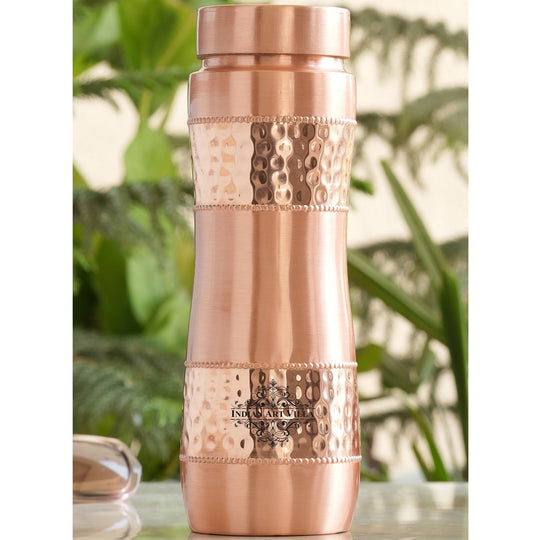
Unlike a lot of drinkware that's designed around a trend cycle, a pure copper bottle is really more like cookware or cutlery — the kind of thing that's meant to be used daily for years. A few reasons copper holds up so well:
● It's a solid, dense metal, not a coating — so there's nothing to peel, chip, or flake off with normal use.
● It doesn't rust the way iron does. Copper reacts with air and moisture to form a protective surface layer, not structural decay.
● There are no seals, batteries, insulation layers, or moving parts to fail — it's a single piece of metal, so there's very little that can actually "break."
● It's been used this way for centuries. In fact, copper vessels are part of a craft tradition — India's thathera artisans have hand-shaped copper and brass vessels for generations, and that same hammering technique is what gives many bottles their strength and their handcrafted texture.
The One Thing That Changes: The Look, Not the Bottle Itself
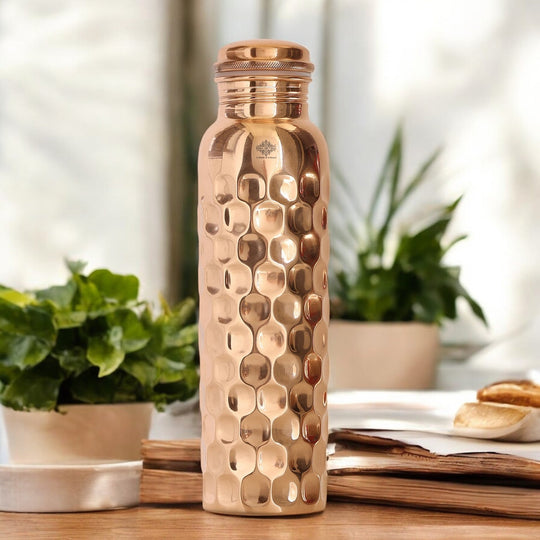
Here's what trips people up: a copper bottle's colour shifts over time, and that can feel like "wear." It isn't. That shift is called patina, and it's simply copper's natural, protective reaction to air, water, and use. A brand-new bottle is bright, shiny, and almost rose-gold. Over weeks and months, it can mellow into a warmer amber tone, and eventually toward a deeper brown — sometimes with faint darker or greenish undertones in spots that get less handling. This is completely normal, it's not a sign of a lower-quality bottle, and it doesn't affect how the bottle works. Plenty of people actually prefer the older, richer look — it's the same idea as a leather bag or a wooden cutting board getting better-looking with age.
If you want to keep that bright, new-penny shine for longer, you absolutely can — it just takes a few minutes of upkeep now and then, which we'll get into below.
What Actually Determines How Long Yours Will Last
1. Purity of the copper
This is the big one. A bottle made of 100% pure, food-grade copper will hold up far better over the years than a thin copper-plated or copper-coated bottle, where the copper is just a surface layer over another metal. With plated bottles, that outer layer can wear thin with repeated use and cleaning, eventually exposing the metal underneath. A solid copper bottle doesn't have that problem — the copper goes all the way through, so there's simply no layer to wear away.
2. How it's cleaned
Copper is fairly low-maintenance, but it does prefer gentle care. A quick rinse after use, and an occasional clean with a natural acidic mix (think lemon and salt, or a mild vinegar solution) to bring back the shine, is really all it needs. Harsh chemical cleaners or abrasive scrubbers aren't necessary and can be avoided.
3. Where and how it's stored
Keeping the bottle dry between uses — rather than leaving water sitting in it for very long stretches, or storing it damp — helps it stay at its best for longer. A quick towel-dry after washing goes a long way.
4. The craftsmanship behind it
A bottle that's been properly hand-finished, with smooth seams and quality joints (like the hammered, dent-resistant designs Jaipur's artisans are known for), will simply age better than a mass-produced, thin-walled one. This is one of the reasons the thickness and finish of a copper bottle matters as much as the fact that it's "copper" at all.
Simple Habits That Help It Last Even Longer
● Rinse it after every use, especially if you've had anything other than plain water in it.
● Give it a natural clean (lemon + salt, or a light vinegar soak) every one to two weeks to keep the shine even.
● Dry it fully before you put the lid back on or store it away.
● Avoid the dishwasher — copper prefers a gentle hand-wash.
● Let it breathe: avoid keeping it sealed and damp in a bag for long periods.
A Bottle That's Built to Be Kept, Not Replaced
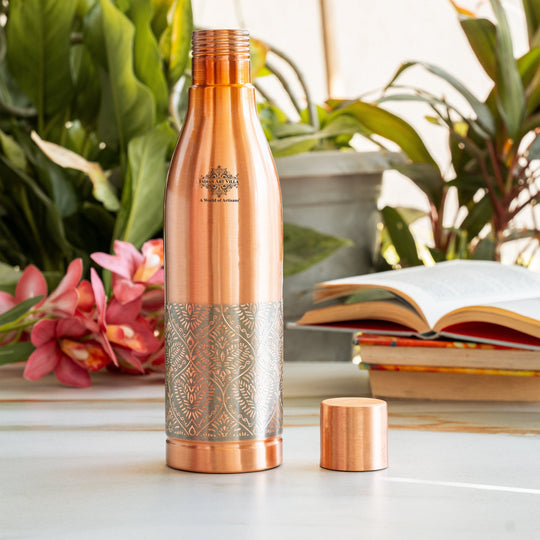
A lot of drinkware ends up in the back of a cupboard within a year or two. A well-made copper bottle tends to go the other way — the more it's used, the more character it develops, and the more it starts to feel like "yours." If you're looking for a solid, food-grade option to start with, a hammered pure copper bottle is a great everyday pick, with a texture that hides fingerprints and small marks beautifully as it patinas. And if you're buying one as a gift, a copper bottle paired with matching glasses makes for a set that's genuinely meant to be used for years, not just admired once and set aside.
Either way, a copper water bottle isn't something you buy for a season — it's something you buy once and use for a very long time.
FAQs
Does a copper water bottle expire or go bad?
No. Copper doesn't have an expiry date. It's a stable metal that simply develops a natural patina over time — the bottle itself keeps working just as well.
Is it normal for my copper bottle to turn dark or dull?
Yes, completely normal. That colour change is the natural patina process, caused by copper's reaction with air and water. It's cosmetic, not a defect, and a quick lemon-and-salt clean can restore the original shine any time you want it.
How long does a pure copper bottle last compared to a copper-plated one?
A pure, solid copper bottle typically lasts many years longer, since there's no coating to wear down. A plated bottle's copper layer can thin out with repeated washing and use, eventually revealing the base metal underneath.
Can I use a copper bottle every single day for years?
Yes — daily use is exactly what these bottles are designed for, and it's actually part of what gives them their character over time.
Do I need to replace a copper bottle once it darkens?
No. Darkening doesn't mean it needs replacing — it's simply the patina. Many people keep the same bottle for decades, occasionally polishing it if they want a brighter look.
What's the best way to make a copper bottle last longer?
Rinse after use, hand-wash instead of using a dishwasher, clean naturally with lemon and salt every so often, and dry it fully before storing.
