


Shopping for a brass dinner set can feel confusing the first time. One set has 6 pieces, another has 24. One plate feels heavy, another feels light. Prices range from "surprisingly affordable" to "wait, why is this so expensive?"
This guide gives you the basics in plain language. By the end, you'll know what to look for, what to skip and how to pick a set you'll enjoy for years, whether you're in New York, London, Toronto or Sydney.
Why People Are Choosing Brass Dinnerware

Brass is an alloy of copper and zinc. It has a warm, golden glow, it's strong, and it has been used for dining for centuries. Handcrafted brass also has something mass-produced plates lack: character. No two pieces are exactly the same.
According to Ayurveda, the traditional wellness system of South Asia, eating from brass is believed to support digestion and balance. That's a traditional belief rather than a modern medical claim, but it's part of why families have kept using brass for generations.
Today, people buy brass dinner sets for a mix of reasons: the look, the durability, the move away from disposable products, and the joy of a table that feels special.
Step 1: Decide Which Pieces You Need
Brass dinner sets come in many shapes. Here's what the common pieces are and what they're used for.
-
Dinner plate or thali: the large main plate, often 10 to 13 inches (25 to 33 cm) wide. A thali has a raised rim, which helps keep food in place.
-
Katoris (small bowls): for soups, dals, curries, sauces, yoghurt or dessert.
-
Spoons: for eating or serving.
-
Glass or tumbler: for water, lassi or other drinks.
-
Serving bowls: larger bowls for sharing dishes at the table.
-
Serving spoons or ladles: handy for family-style meals.
-
Tray or platter: for bringing everything to the table or presenting starters.
Which set size fits you?
-
Set for 1 or 2 (about 5 to 8 pieces): a good starting point for couples or first-time buyers.
-
Set for 4 (about 12 to 20 pieces): the most popular choice for families.
-
Set for 6 to 12 (24 pieces or more): best for people who host often or want a full matching table.
Tip: Buy for your everyday household first. You can always add extra plates and bowls later, and most handcrafted collections let you build a set gradually.
Step 2: Check the Weight
Weight is one of the easiest ways to judge quality.
-
A solid, well-made plate feels substantial in your hands. It stays steady on the table and resists bending.
-
A very light plate is often made from thin sheet metal. It dents easily and can feel flimsy after a few months.
-
Too heavy isn't ideal either. If a plate is so heavy that it's tiring to lift with a full meal, you won't enjoy using it every day.
A good rule: choose a plate that feels sturdy but comfortable. If you're buying online, look for the product's weight in grams or ounces, and compare a few sets. If the weight isn't listed, ask the seller.
Step 3: Pick a Finish
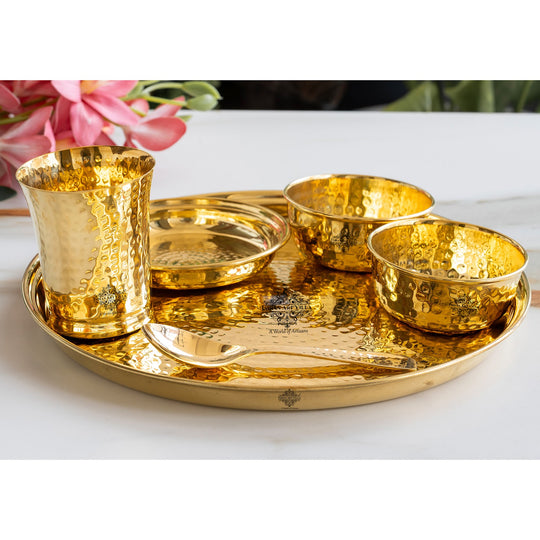
The finish changes how your set looks and how much care it needs.
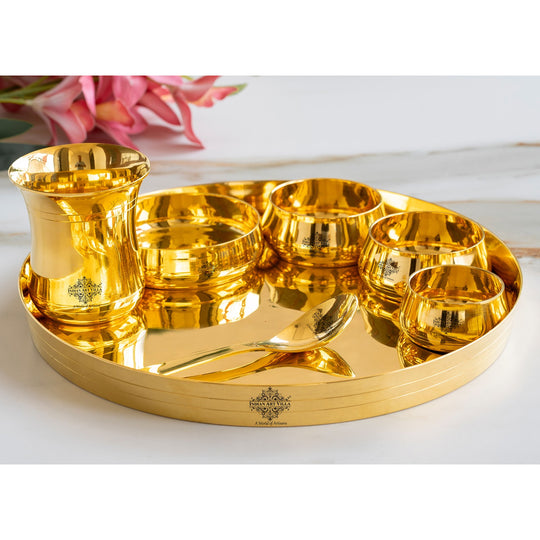
Polished (mirror) finish
Bright, shiny and formal. It looks stunning on a dinner table but shows fingerprints and water spots, so it needs a bit more wiping and polishing.
Hammered finish
The surface has small, hand-beaten dimples. It catches the light in a beautiful way and hides fingerprints and minor scratches well. A great choice for everyday use.
Matte or satin finish
Soft and understated, with less glare. Good for modern, minimalist kitchens.
Antique or oxidised finish
Deeper, darker tones with an aged look. It suits rustic and vintage styles and needs less polishing to look good.
Engraved or embossed designs
Traditional patterns carved or pressed into the metal. These are lovely for special occasions and gifts. Just keep in mind that deeper patterns take a little longer to clean.
Not sure? Start with hammered. It's forgiving, stylish and easy to live with.
Step 4: Look Closely at the Craftsmanship
These small details tell you a lot about quality:
-
Rims: run your finger around the edge. It should feel smooth, not sharp or rough.
-
Base: the plate should sit flat and not wobble.
-
Joints and handles: on spoons, tumblers and bowls with handles, check that joins look clean and secure.
-
Consistency across the set: in a matching set, the pieces should look like they belong together in size, colour and finish. Small hand-made variations are normal and part of the charm.
-
Photos and descriptions: honest sellers show close-up photos and give clear dimensions and weights.
Step 5: Understand Pricing
Brass dinner set prices vary a lot, and the reasons are usually easy to spot.
What affects the price
-
Weight and thickness of the metal: more brass means higher cost.
-
Handcrafted vs machine-made: hand-finished pieces take more time and skill.
-
Number of pieces: larger sets naturally cost more.
-
Finish and design: engraved, embossed or specially finished pieces cost more than plain ones.
-
Brand and seller: buying direct from a maker usually gives you better value than buying through several middlemen.
-
Shipping and duties: for international orders, check delivery costs and delivery times before you buy.
A rough guide
As a general idea, a simple starter set for one or two people costs less, a family set for four sits in the middle, and a large ornate set for six or more costs the most. Exact prices depend on the seller, weight and design, so use the factors above to compare like with like rather than just looking at the lowest number.
Watch out for "too good to be true" prices
If a set is much cheaper than similar ones, ask why. It may be very thin, plated rather than solid brass or poorly finished. A slightly higher price for solid, well-made brass usually pays off over the years.
Step 6: Think About Care Before You Buy
A brass set is easy to look after, but it's good to know what you're signing up for.
-
Hand wash with mild soap and warm water, then dry it right away.
-
Polish occasionally with lemon and salt, or tamarind paste, when it dulls. Rub gently, rinse and dry.
-
Avoid the dishwasher and microwave. Heat and strong detergents damage the finish.
-
Serve and wash. Traditionally, very sour or acidic dishes aren't left sitting in brass for long.
-
Enjoy the patina. Brass darkens naturally over time. Some people love the antique look, while others polish it back to a shine.
If you want minimal upkeep, choose a hammered or antique finish. If you love a bright, gleaming table and don't mind polishing, go for the mirror finish.
A Quick Checklist Before You Buy
-
I know how many people I'm buying for
-
The set includes the pieces I'll actually use
-
The weight feels sturdy and is listed clearly
-
I've chosen a finish that suits my style and my patience for polishing
-
The rims are smooth and the base is stable
-
The price makes sense for the weight, quality and number of pieces
-
I've checked shipping costs and delivery time
-
The seller has clear photos and real reviews
Why Buy from Indian Art Villa
Since 2012, Indian Art Villa has been a direct manufacturer of handcrafted copper, brass, bronze and silver-plated products. We work with skilled artisans and sell straight to you, so you get real craftsmanship without unnecessary middlemen.
-
25,000+ customer reviews from buyers around the world
-
2,500+ handcrafted products, including brass dinnerware, serveware and gifts
-
International delivery to the USA, UK, Canada and Australia
-
Gift-ready pieces for weddings, housewarmings and holidays
Browse our handcrafted brass dinner sets at Indian Art Villa and find the one that turns everyday meals into something you look forward to.
Frequently Asked Questions
How many pieces should a brass dinner set have?
It depends on your household. Sets for one or two people usually have 5 to 8 pieces, sets for four have around 12 to 20, and larger sets for six or more have 24 or more. Start with what you use daily and add extras later.
How do I know if a brass dinner set is good quality?
Check the weight, the smoothness of the rims, the stability of the base and the consistency of the finish. Clear photos, product details and genuine customer reviews are also good signs.
Which finish is best for everyday use?
Hammered and antique finishes are the most practical, since they hide fingerprints and light scratches. Polished finishes look stunning but need more wiping and polishing.
Is a heavier brass plate better?
Usually a sturdier plate is better quality, but it should still be comfortable to lift when full. Very light plates are often thin and dent easily.
Why do brass dinner sets vary so much in price?
Price depends on metal weight, handcrafting, the number of pieces, the finish and design, and whether you buy direct from the maker. Compare sets with similar weight and pieces to judge value.
Is it safe to eat from brass dinnerware?
Brass has been used for dining for centuries. For best results, serve dry or mildly moist foods and avoid leaving very acidic dishes in it for long. If you have health concerns, check with your doctor.
What does Ayurveda say about eating from brass?
According to Ayurveda, eating from brass is traditionally believed to support digestion and balance. These are traditional beliefs, not modern medical claims.
How do I clean and polish a brass dinner set?
Wash by hand with mild soap and warm water, then dry it fully. For tarnish, rub gently with lemon and salt or tamarind paste, then rinse and dry.
Can I put brass dinnerware in the dishwasher or microwave?
No. Always hand wash brass and never microwave it.
Will brass lose its shine?
Brass darkens naturally over time. You can polish it back to a shine or enjoy the antique patina.
Is a brass dinner set a good gift?
Yes. It's a lasting, elegant gift for weddings, housewarmings, anniversaries and holidays.
Does Indian Art Villa ship internationally?
Yes. We ship to the USA, UK, Canada, Australia and more. Delivery details appear at checkout.
