


Short answer: Cooking in brass is good when the utensil is properly tin-lined (called kalai in India) and you use it the traditional way. Brass has been used in kitchens for centuries for exactly this reason. Let’s look at why people still love it, and how to get the best from it.
What Exactly Is Brass?
Brass is a metal alloy made mostly of copper and zinc. That gives it a warm golden glow and a sturdy build that lasts for generations. In many Indian homes, brass pots, handis, and kadhais get passed down from grandmothers to granddaughters, and they often look better with age.
Why People Cook in Brass
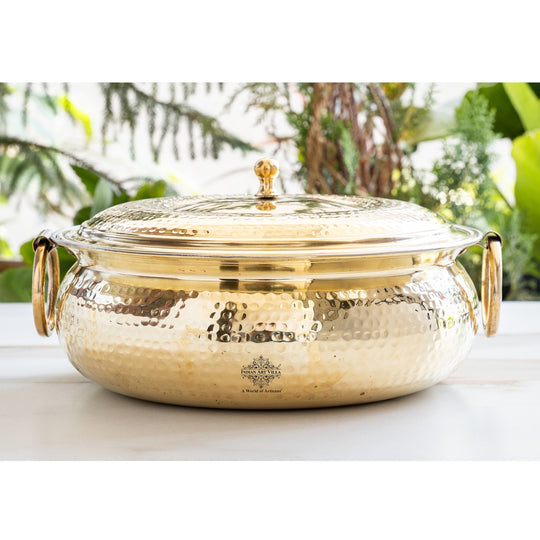
-
Even, gentle heat. Brass warms steadily, so slow-cooked dishes like dals, curries, and rice preparations simmer beautifully without scorching.
-
Built to last. A well-made brass pot can outlive most modern cookware.
-
Traditional taste. Many families feel food cooked slowly in brass tastes richer and more “homemade.”
-
Beautiful on the table. A brass handi can go straight from the stove to the dining table.
The Secret to Cooking Safely: The Tin Lining
Traditional brass cookware has a thin tin coating on the inside. This lining acts as a barrier between your food and the metal. It is the reason brass cooking has stayed a trusted tradition for so long.
A few easy habits keep your brass cookware at its best:
-
Choose tin-lined pieces for cooking. Unlined brass is better suited for serving, display, and ceremonial use.
-
Use wooden or silicone spoons. Metal spoons can scratch the lining.
-
Cook on low to medium heat. Brass doesn’t need high flames, and gentle heat protects the lining.
-
Don’t store food in the pot. Cook, serve, and transfer leftovers to glass or steel containers.
-
Go easy on very sour dishes. Cooking with lots of tamarind, lemon, or tomato is best done in a lined pot or a different vessel.
-
Get it re-tinned when the lining wears thin. Local artisans can do this quickly and affordably.
How to Clean Brass Cookware
Cleaning is simple. Wash with mild soap and warm water right after use, then dry well. To bring back the shine on the outside, rub gently with a mix of lemon and salt, or tamarind paste, and rinse thoroughly. Skip harsh scrubbers on the inside so you don’t damage the lining.
Brass for Serving, Gifting and Everyday Living
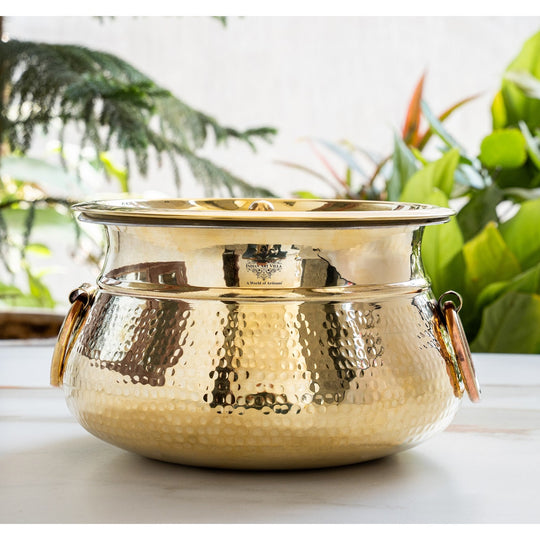
Even if you prefer other cookware for daily cooking, brass shines at the table and around the home. Serving bowls, plates, tumblers, and decorative pieces add warmth and heritage to any kitchen or dining space. If you’d like to explore handcrafted brass pieces made by skilled Jaipur artisans, take a look at the collections at Indian Art Villa. You’ll find authentic brass, copper, and bronze pieces made for everyday use and for gifting.
So, Is It Good or Bad?
Brass is a good, time-tested choice when it’s tin-lined and used with a little care. Treat it like a favorite cast iron pan: a few simple habits, and it rewards you for decades.
Frequently Asked Questions
Is cooking in brass utensils safe?
Yes, when the brass utensil has a proper tin lining on the inside and you cook on moderate heat. This is how brass has been used in Indian kitchens for centuries. Avoid storing food in the pot, use wooden or silicone spoons, and have the lining renewed when it wears thin. Unlined brass is best kept for serving and decorative use.
What is the healthiest material for utensils?
There isn’t one single winner, because the best choice depends on what you’re making. Stainless steel is a dependable all-rounder. Cast iron suits slow cooking and searing. Clay and ceramic are lovely for gentle simmering. Glass is ideal for storage. Lined brass and lined copper are traditional favorites for slow cooking and serving. Many households use a mix and pick the right vessel for each dish.
Which is better, brass or copper utensils?
Both are wonderful, and they shine in different ways. Copper heats up faster and responds quickly to temperature changes, which chefs love for precise cooking. Brass is sturdier and holds heat more steadily, which makes it great for slow-cooked meals. Both work best with a protective lining for cooking, and both look stunning on the table. If you love quick, responsive heat, go with copper. If you love slow, steady cooking and a rugged build, go with brass.
Which is better for health, brass or bronze?
Both have a long tradition in Indian homes. Bronze (called kansa in India), a blend of copper and tin, is traditionally used for eating plates and bowls. Brass, a blend of copper and zinc, is traditionally used for cooking when lined, as well as for serving and storing water. Neither is a magic cure, so the best approach is to use each the way it has traditionally been used: lined brass for cooking, bronze for serving and eating.
