


You found a beautiful copper bottle online. The price looks great, the photos look shiny, and the listing says "100% pure copper." But how do you know it's actually copper and not brass, steel with a coppery coating, or even painted aluminum?
Good news: you don't need a lab. With a few household items and a little patience, you can check it yourself. Let's walk through it together.
Why It Matters if Your Copper Bottle Is Real

Copper water bottles have been part of daily life in Ayurveda, the ancient Indian system of wellness, for thousands of years. According to Ayurveda, water stored in a copper vessel overnight, known as tamra jal, is traditionally believed to support digestion and overall balance. These are traditional beliefs, not medical claims.
Here's the catch: that tradition only works if the water actually touches real copper. A bottle that is just copper-colored on the outside, or lined with steel on the inside, won't give you the same experience. So it's worth knowing what you're buying, whether you live in New York, London, Toronto, or Sydney.
Test 1: Look at the Color
Start with your eyes. Real copper has a warm, reddish-pink to brown tone, a bit like a new penny. Here's how to spot the difference:
-
Too yellow or golden? That's probably brass, which is copper mixed with zinc.
-
Silver or grey showing at the edges or rim? That's likely steel or aluminum underneath.
Color alone isn't proof, but it's a quick first filter.
Test 2: Try the Magnet
Grab a fridge magnet and hold it against the bottle. Pure copper is not magnetic, so the magnet should not stick at all.
If it clings, there's iron or steel in there. One small warning: brass and aluminum are also non-magnetic, so passing this test doesn't prove it's copper. It only rules out steel.
Test 3: Choose a Renowned Brand
The surest way to avoid a fake is to buy from a renowned brand with a proven track record, like Indian Art Villa. A trusted brand is open about what its bottles are made of, and thousands of real customer reviews show how its products hold up over time.
Whichever brand you choose, look for a clear purity statement on the product page, often 99% or higher for pure copper. If a seller avoids simple questions about what the bottle is made of, treat that as a warning sign.
Pair a brand you can trust with the other tests in this guide, and you can buy with much more confidence.
Test 4: Gently Scratch a Hidden Spot
Using a coin or the edge of a key, make a very light scratch on the bottom of the bottle. Real copper shows a reddish-orange shine underneath. If you see silver, grey, or a different color, the bottle is plated or painted.
Only do this on an area nobody will see. And if you're testing a bottle you haven't bought yet, ask the seller about the material instead.
Test 5: Feel the Weight and Listen to the Sound
Pick it up. A well-made copper bottle feels solid and a little heavy for its size. Super light bottles are often thin metal with a coating.
Now tap it gently with your fingernail or a spoon. Copper gives a soft, clear ring that fades slowly. A dull thud or a tinny, rattling sound is a red flag.
Test 6: Check the Inside
This is the one many people skip, and it's the most important. Look inside the bottle with a flashlight.
-
Pure copper inside: you'll see the same reddish-brown copper tone on the inner walls.
-
Steel or silver lining: the bottle is copper on the outside only, so your water won't touch copper at all.
-
Coated or lacquered interior: this acts like a barrier between the water and the metal.
If your goal is to enjoy traditional copper water, the inside must be real, uncoated copper.
Test 7: Watch How It Ages
Real copper isn't meant to stay shiny forever. Over time it naturally darkens and develops a soft patina. That's a good sign, not a flaw. The best part is that a little lemon and salt brings the glow right back.
A bottle that never changes at all, even after months, is usually coated or plated.
Smart Buying Tips Before You Order
Tests are great, but it's even better to avoid a fake in the first place. Keep these in mind:
-
Be careful with very low prices. Pure copper is a real metal with a real cost.
-
Read the description closely. Look for words like "pure copper," "unlined," and "handcrafted," and check that the listing says what the inside is made of.
-
Check the reviews. Look for photos from real customers and comments about how the bottle looks after months of use.
-
Buy from a maker you can trust. A brand that makes its own products can tell you exactly what goes into them.
Where to Find Genuine Copper Bottles
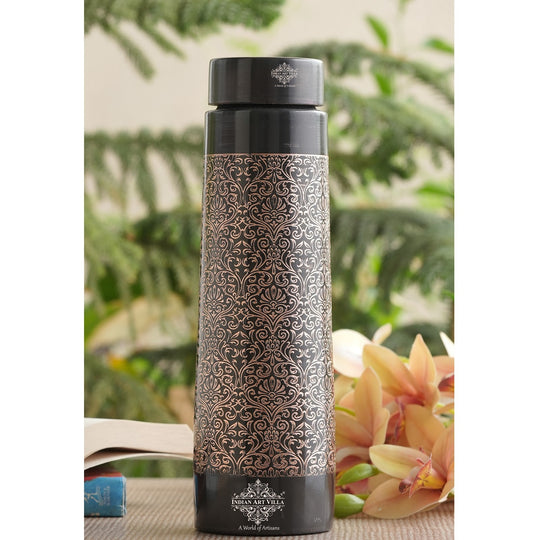
At Indian Art Villa, we're a direct manufacturer of handcrafted copper, brass, bronze, and silver-plated products. Our copper water bottles are made from pure copper, built for daily use, and shipped to customers in the US, UK, Canada, and Australia. With more than 2,500 products and over 25,000 customer reviews, we've spent years helping people bring authentic copperware into their homes.
If you'd like to browse our collection of copper bottles, glasses, and gift sets, visit indianartvilla.com. And if you ever have a question about a product, just reach out. We're happy to help.
Frequently Asked Questions
1. What is the easiest way to check if a copper bottle is real? The quickest way is the lemon and salt test combined with a look inside the bottle. Real copper brightens after a dab of lemon and salt, and its inner walls should be reddish-brown, not silver.
2. Is a copper bottle magnetic? No. Pure copper does not attract magnets. If a magnet sticks, the bottle contains iron or steel. Keep in mind that brass and aluminum aren't magnetic either, so use other tests too.
3. Can brass be mistaken for copper? Yes, very easily. Brass has a more yellow, golden tone, while copper is reddish-pink. Brass is a mix of copper and zinc, so it's a different metal.
4. Why does my copper bottle turn dark or green? That's natural oxidation. Copper reacts with air and moisture, forming a patina. It's normal and can be cleaned with lemon, salt, or a little vinegar.
5. Does a steel-lined copper bottle count as pure copper? Not for traditional copper water use. If the inside is steel, the water doesn't touch copper. Choose a bottle with an unlined copper interior.
6. How often should I clean my copper bottle? A quick rinse after each use and a deeper clean with lemon and salt once a week or whenever it looks dull is usually enough.
7. How long can I keep water in a copper bottle? According to Ayurveda, water is traditionally stored in copper overnight (around 8 hours) and then enjoyed through the day. Avoid storing acidic drinks like juice or soda in it.
8. Where can I buy a real copper water bottle online? You can explore handcrafted copper bottles at indianartvilla.com, where our products are made from pure copper and shipped internationally.
Final Thoughts
Checking whether a copper bottle is real only takes a few minutes. Look at the color, try the magnet, test with lemon and salt, peek inside, and trust a maker who's open about their materials. Do that, and you'll end up with a bottle that looks beautiful, ages gracefully, and gives you the real copper experience every day.
