


Imagine a pot that goes from stove to table and looks stunning on both. It's warm and golden, it holds heat beautifully, and it's the kind of piece your family could still be cooking in decades from now. That's brass cookware.
Chefs around the world used brass long before non-stick coatings existed. Today, home cooks/chef from New York to London, Toronto to Sydney are rediscovering it. They want cookware that's durable, handcrafted and full of character. This guide covers what brass cookware is, why people love it, what to cook in it, and how to keep it beautiful.
What Is Brass Cookware?
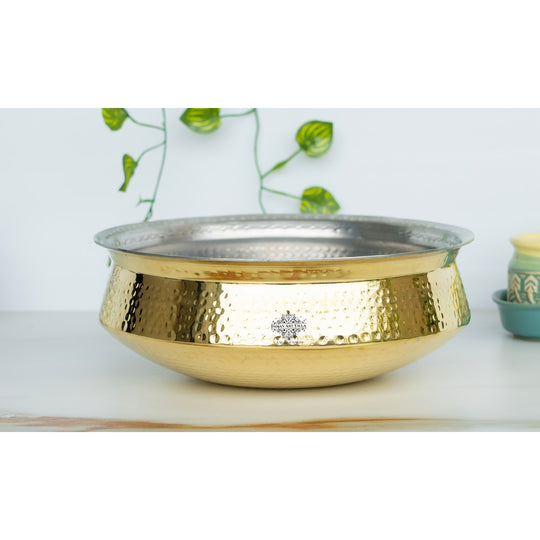
Brass is an alloy of copper and zinc. That combination gives it its rich golden colour, its strength and its excellent heat conduction. Skilled artisans hammer, shape and finish each piece by hand, so no two pots are exactly alike.
Common shapes include deep stockpots for soups and stews, wide-bellied pots for braises and rice dishes, rounded wok-style pans for sautéing, and small tempering pans for blooming spices in hot oil. Each was designed for slow, flavourful cooking.
Why People Love Cooking in Brass
1. Even, Steady Heat
Brass conducts heat well and holds on to it. Food cooks gently, without harsh hot spots, which is ideal for stews, soups, sauces and slow braises.
2. Built to Last
A well-made brass pot doesn't chip, peel or flake like coated pans. With basic care, it can serve your family for decades and become a true heirloom.
3. Beautiful From Stove to Table
Brass looks gorgeous on a dinner table. Serve your dish in the same pot you cooked it in. It keeps food warm and makes even a weeknight meal feel special.
4. A Tradition of Wellbeing
According to Ayurveda, the traditional wellness system that originated thousands of years ago, cooking and serving in brass vessels has long been believed to support balance and wellbeing. These are traditional beliefs, not medical claims, and many people simply love the heritage that comes with them.
5. A More Sustainable Kitchen
Brass is durable and recyclable. Buying one good pot instead of replacing cheap pans every few years is a small but meaningful step toward a more sustainable kitchen.
An Important Note: Choose Tin-Lined Brass for Cooking
This matters, so we'll be direct. Brass used for cooking should be lined with tin, a traditional food-safe coating. The lining creates a protective surface between your food and the metal, which is especially important with acidic ingredients like tomatoes, wine, citrus or vinegar.
-
Use tin-lined brass for everyday cooking.
-
Use unlined brass for serving, storing dry foods, or decorative display.
-
Avoid cooking very acidic dishes in unlined brass.
If you're unsure which type you're buying, ask the seller. A trustworthy maker will tell you plainly.
What Can You Cook in Brass Cookware?
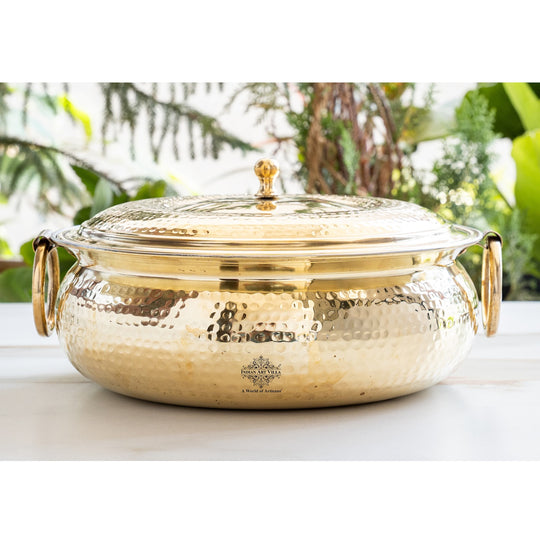
Brass shines with slow, gentle cooking. Some favourites:
-
Stews and curries: Long simmering lets the flavours deepen beautifully.
-
Soups and lentil dishes: Creamy, comforting and evenly cooked.
-
Braised meats and vegetables: Steady heat keeps everything tender.
-
Rice dishes: Pilafs, risottos and paella-style rice,Biryani, cook evenly in a wide pot.
-
Rice pudding and milk-based desserts: Gentle warmth suits slow-cooked sweets.
-
Spice tempering: A small brass pan is perfect for blooming whole spices in hot oil.
Brass is not the best choice for very high-heat searing or for storing sour, acidic foods for long periods.
How to Use Brass Cookware
-
Wash before first use with warm water and mild soap.
-
Cook on low to medium heat. Brass heats efficiently, so you rarely need high flames.
-
Use wooden or silicone utensils to protect the lining.
-
Never leave it empty on the heat, as that can damage the lining.
-
Let it cool before washing to avoid sudden temperature shock.
How to Care for Brass Cookware
-
Wash by hand with a soft sponge and mild soap. Skip the dishwasher.
-
Dry it right away with a soft cloth.
-
Brass naturally darkens over time. To restore the shine on the outside, rub with a paste of lemon juice and salt (or tamarind and water), then rinse and dry.
-
Never scrub the tin-lined interior with harsh abrasives.
-
Store it in a dry place.
Follow this simple routine and your cookware will stay beautiful for years.
Why Choose Handcrafted Brass Cookware from Indian Art Villa?
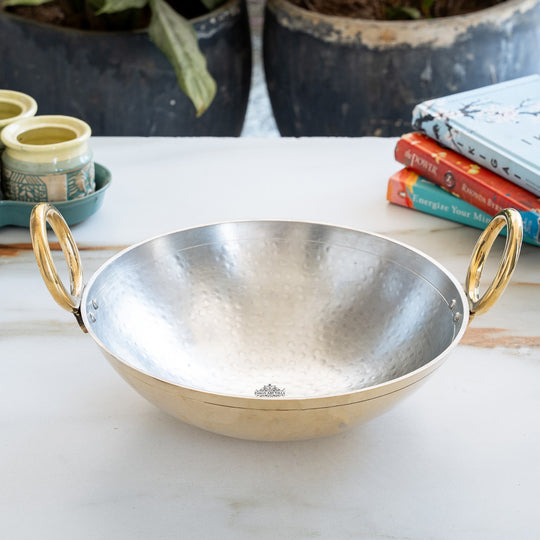
Not all brass is equal. At Indian Art Villa, every piece is made by skilled artisans using time-honoured techniques. As a direct manufacturer, we oversee quality from the workshop to your doorstep. That means:
-
Authentic craftsmanship in every hammered curve and finish
-
Fair, honest pricing without unnecessary middlemen
-
Timeless designs that suit modern kitchens
-
Trusted by thousands of happy customers, with over 25,000 reviews across our stores
-
Worldwide shipping to the US, UK, Canada, Australia and beyond
Whether you're starting with a single pan or building a full brass cookware set, you're choosing something made to be used, shared and passed down.
Ready to bring handcrafted characters into your kitchen? Explore our brass cookware collection at Indian Art Villa and find the piece your recipes have been waiting for.
Frequently Asked Questions
1. Is brass cookware safe to cook in?
Yes, when it is properly tin-lined. The lining separates your food from the brass and is the traditional standard for cooking. Unlined brass is better suited to serving and storing dry foods.
2. What are the benefits of cooking in brass?
Brass heats evenly, lasts for generations and looks beautiful on the table. According to Ayurveda, it has also long been valued in traditional kitchens for supporting wellbeing.
3. Can I cook acidic foods like tomato sauce in brass?
In tin-lined brass, yes, in moderation. Avoid cooking or storing very acidic foods in unlined brass.
4. Can I use brass cookware on an induction cooktop?
Brass isn't naturally magnetic, so it generally doesn't work on induction unless you use an induction plate. It works well on gas, electric coil and ceramic stovetops.
5. Can brass cookware go in the oven?
Tin-lined brass is best kept to stovetop use, as high oven temperatures can damage the lining. Check the care guidance for your specific piece.
6. How do I clean brass cookware?
Hand wash with mild soap and a soft sponge, and dry right away. Clean the outside with lemon and salt or tamarind to remove tarnish. Avoid harsh scrubbing inside.
7. Does brass cookware need to be re-tinned?
Over years of use, the tin lining wears thin. When it looks patchy or worn, have it re-tinned by a professional to keep the cookware safe.
8. What is the difference between brass and copper cookware?
Brass is a mix of copper and zinc with a golden tone. Copper is a pure metal with a reddish shine. Both are traditionally tin-lined for cooking.
9. Does Indian Art Villa ship brass cookware internationally?
Yes. We ship globally.
