


Introduction
A copper water dispenser and a copper pitcher both let water rest in copper long enough to pick up its natural mineral benefits, but they are built for very different households, and picking the wrong one is the most common mistake first-time buyers make. A family of five sharing a one-and-a-half-litre pitcher will be refilling it constantly through the day. A couple buying a 15-litre dispenser will end up storing the same water for the better part of a week, well past the point it should be consumed.
This guide breaks down the real differences between the two formats — capacity, daily use case, price range, and maintenance — so you can match the product to your household instead of just picking whatever shows up first on a search page.
Copper Water Dispenser vs Copper Pitcher: Quick Comparison
A copper water dispenser is a large-capacity container, typically 8 to 20 litres, fitted with a tap or spout and designed for countertop use by families or offices. A copper pitcher is a smaller, handle-and-spout vessel, typically 1 to 2.5 litres, made for filling and pouring at the dining table or bedside. The core difference is volume and access: a dispenser serves several people across multiple days from one fill, while a pitcher is refilled daily or every other day for one or two people's immediate use.
|
Feature |
Copper Water Dispenser |
Copper Pitcher |
|
Typical capacity |
8–20 litres |
1–2.5 litres |
|
Best for |
Families, offices, joint households |
Couples, small households, bedside use |
|
Refill frequency |
Every 3–5 days |
Daily or every other day |
|
Footprint |
Large, fixed countertop spot |
Small to medium, easily movable |
|
Price range (international) |
Higher (larger copper volume) |
More affordable, mid-range |
|
Pouring mechanism |
Tap |
Handle, poured by hand |
|
Ease of cleaning |
Moderate |
Moderate |
When a Copper Water Dispenser Is the Right Choice
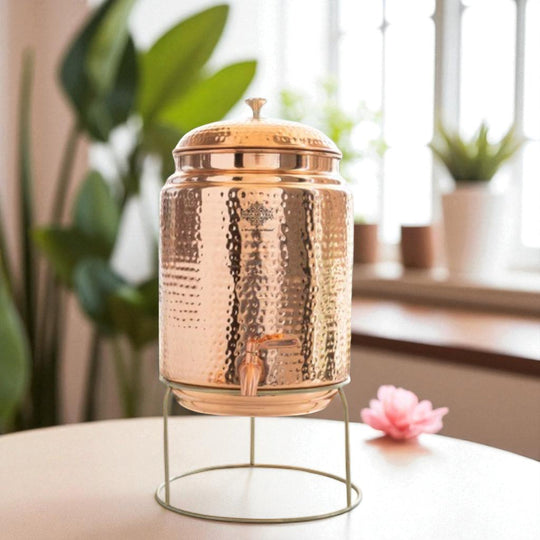
A copper water dispenser makes sense when more than two or three people in a household are drinking copper-infused water daily, because its tap mechanism lets each person draw water without lifting or tilting a heavy container. This is the format most often bought for joint families, shared offices, yoga studios, and clinics where multiple people need access throughout the day.
The bigger advantage is consistency. Because the dispenser holds a larger water volume that rests in copper for an extended period — usually recommended at 6 to 8 hours minimum — everyone drawing from it gets water that has gone through the same oligodynamic effect, the natural process by which copper ions interact with water to give it antimicrobial properties, a principle Ayurveda has used for centuries under the practice of Tamra Jal.
The trade-off is space and price. A dispenser needs a fixed countertop spot it can't easily be moved from, and because it uses significantly more copper than a pitcher, it typically costs more upfront.
When a Copper Pitcher Is the Right Choice
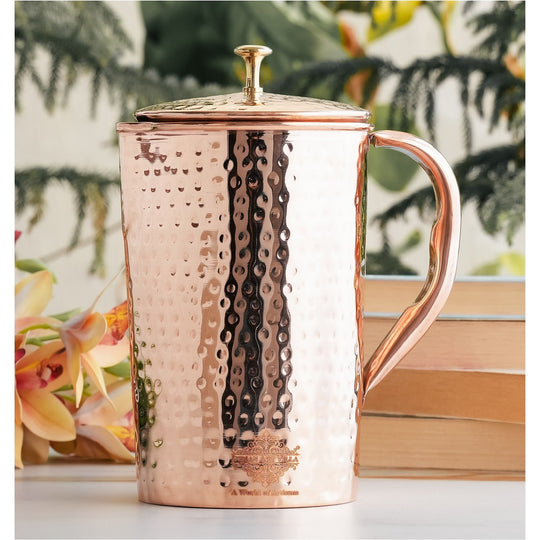
A copper pitcher is the right pick for individuals, couples, and small households who want to fill, pour, and refill on a daily rhythm rather than store several days' worth of water at once. Its handle-and-spout design makes it easy to carry between the kitchen, dining table, or bedside, and its 1 to 2.5 litre capacity is sized for a day's drinking rather than a week's storage.
Pitchers are often the preferred choice for buyers replacing a plastic or steel jug for bedside or tabletop use, especially when they lack the space, need, or budget for a larger dispenser. They're also generally easier to clean thoroughly, since the wider mouth allows a hand or brush to reach the base — something a tap-fitted dispenser can't always offer without removing the tap separately.
Perfect for students, people on the move, solo occupants, and first-time users who want to experience the benefits of copper storage before committing to a larger dispenser.
Capacity Guide: How Much Copper Water Storage Do You Actually Need?
The right capacity comes down to a simple calculation: each adult drinking copper-infused water typically consumes 1 to 1.5 litres of it per day, so multiply household size by that range and add a small buffer for refill timing.
|
Household Size |
Recommended Vessels |
Suggested Capacity |
|
1–2 people |
Copper pitcher |
1.5–2.5 litres |
|
3–4 people |
Copper pitcher (large) or small dispenser |
2.5–8 litres |
|
5+ people / office |
Copper water dispenser |
10–20 litres |
Maintenance: Does the Format Change How You Clean It?
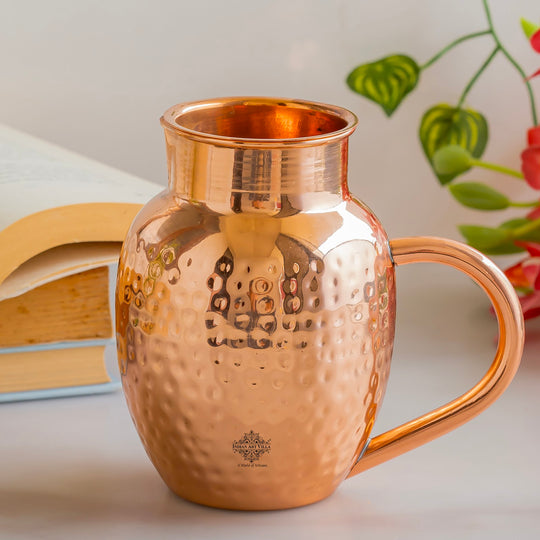
Yes — maintenance difficulty rises with mechanism, not just size. A pitcher's wide opening makes interior cleaning simple by hand with a halved lemon and salt or tamarind paste, the traditional method for removing the dark patina copper naturally develops. A dispenser is easy to maintain but benefits from regular cleaning to keep it hygienic and working efficiently.
Neither should ever go in a dishwasher or be scrubbed with abrasive steel wool, both of which strip the copper's surface and accelerate unwanted corrosion rather than the natural, harmless tarnish copper develops over time.
Price Comparison: What Should You Expect to Pay?
Price scales primarily with the amount of copper used, which is why pitchers sit at the more affordable end and dispensers — particularly anything above 10 litres — command a higher price. Within either category, hand-hammered and artisan-finished pieces cost more than smooth machine-finished ones because of the labour-intensive hammering process, often done by thathera craftsmen whose copper and brass metalworking is recognised as a UNESCO Intangible Cultural Heritage practice. Thicker-gauge copper, which lasts longer and resists denting, also pushes price upward within any given size.
Frequently Asked Questions
Is a copper water dispenser safe?
Yes, a copper water dispenser is safe for daily use when food-grade, lead-free copper is used and water isn't left standing in it for more than 24 hours at a stretch. Copper is one of the few metals the human body actually requires in trace amounts, and the oligodynamic effect — copper ions interacting with stored water — has been used safely in Ayurvedic practice for centuries. The main safety considerations are sourcing a dispenser from a manufacturer that uses pure, uncoated copper, rinsing it daily, and avoiding acidic liquids like citrus juice or buttermilk, which react with copper differently than plain water does.
Is a copper pitcher better than a copper water dispenser?
Both copper pitchers and dispensers serve different needs equally well. Pitchers are ideal for smaller households that value compact storage, easy handling, and daily refills, while dispensers are better suited to larger households or shared spaces that require greater capacity and convenient access to water. The best choice depends on your lifestyle, available space, and usage requirements.
What is the best copper water dispenser?
The best copper water dispenser is one made from pure, food-grade copper with a properly sealed tap mechanism, sized to your household's daily water consumption, and finished by skilled hand-hammering rather than thin machine pressing. Look for a manufacturer that's transparent about copper purity (ideally 99%+), offers a tap that can be removed for cleaning, and provides a capacity that matches how many people will be drawing from it daily — an 8 to 10 litre dispenser comfortably covers a family of four to five, while anything above 15 litres suits offices or joint households.
What are the disadvantages of copper water?
The main disadvantages of copper water are the risk of copper toxicity if water sits in an uncoated copper vessel for too long or is consumed in excess, a metallic taste some people notice initially, and the ongoing maintenance copper requires compared to steel or plastic, since it tarnishes and needs regular cleaning with natural acidic agents like lemon or tamarind. People with Wilson's disease, a rare genetic disorder that causes copper to build up in the body, should avoid copper-stored water entirely, and anyone with copper allergies or sensitivities should consult a doctor before adopting the practice.
How often should I refill a copper pitcher versus a dispenser?
Whether you choose a copper pitcher or a copper dispenser, both offer a practical way to incorporate copper-stored water into your routine. Pitchers are perfect for daily personal use, while dispensers provide greater capacity and convenience for households that consume larger volumes of water.
Conclusion
There isn't a single “best” format between a copper water dispenser and a copper pitcher — there's only the one that matches your household size and daily routine. Larger families, shared offices, and joint households are better served by a dispenser's tap-and-capacity combination. Individuals, couples, and small households usually get the most practical use, easiest cleaning, and lowest upfront cost from a pitcher. Whichever format fits, the underlying benefit — water that rests in pure copper long enough to absorb its natural properties — stays the same.
